Dr. Robert J. Leaf · Nantucket, Massachusetts
A happily retired dentistheard some of AI's own builders warn the world,and at 81ended his retirement that day.
After a lifetime spent pricing risk, Bob Leaf now spends his days, at 82, trying to keep artificial intelligence safe for humanity, and first of all for children.
BeginThe Warning

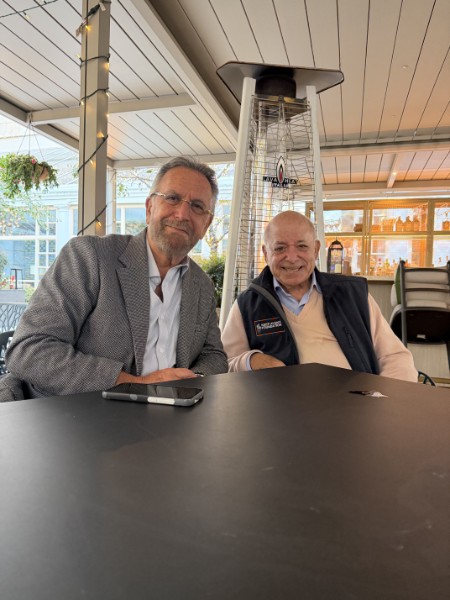
In the spring of 2025, Robert Leaf was eighty-one and comfortably retired. He had built companies, taught at the dental school he graduated from, and, by his own telling, sailed his own boat from Nantucket to Turkey and back. He had earned his evenings. He spent them, he says, the way a lot of retired people do: “I too was watching TV in the evenings.”
What he was watching that spring were some of the scientists who had helped build modern artificial intelligence, warning the world about it. They were on the news and on YouTube. These were not critics at the edges; some of them were the very people who had made the thing. “What I heard was truly alarming,” he wrote a few months afterward. He kept listening.
As I listened carefully… I could not just sit by and let this happen to humanity. I knew that although I was 81 years old, I still had my mind that could clearly understand and analyze world class issues and I was extremely good at getting businesses started.
He is not a man who sits by. By early August he had put in, by his own count, some twelve hundred hours working with AI systems on how to stop what he feared. His first names for the mission were blunt: Stop Human Extinction, then HOPE, for Humanity Over Profit and Extinction. He proposed a planet-wide protest at a single appointed hour. He wrote, “Failure is not an option.”
A younger friend, Yarin Kirchen, told him they needed to walk before they could run. Bob answered: “Yarin you are 100% correct… I frequently get ahead of myself.”
He slowed a little. He did not stop. In late August 2025 the Keep AI Safe Foundation was filed in Florida, and a domain was bought: keepaisafe.org. By October he had found a dry way to describe his new situation: “It is hard to turn down a job which includes saving the human race.”
The image he reaches for is not a technical one. “Think of building dinosaurs and releasing them all over the planet with no fences.” Neither is the feeling under it. “When I go out of my home and meet happy people, young people and realize if we do not succeed they are all at great risk.”
Later, when his letters had grown calmer, he compressed the whole turn into two sentences. He had been happily retired when he realized that humanity was in serious danger from AI. “I ended my retirement that day.”
This is the night the story begins in. It does not stay there.
October 2025I have a new full time job 12 hours a day 7 days a week, and I have to pay to work there.
A Life Spent Pricing Risk

Why would anyone listen to a retired dentist about artificial intelligence? His answer is his life.
At Cornell, his published biography says, he took a double major in economics and chemistry: one subject for the tooth, one for the ledger. In 1969 he graduated from the Harvard School of Dental Medicine with his DMD, and later taught there. For about ten years, by his account, he taught dental economics to dental students, at Harvard and at Columbia: not how to repair a tooth but what a tooth costs, who pays, and why.
Then he turned from the tooth to the ledger. Dental insurance reached only a few hundred thousand people when he started, he says. His biography lists what followed: he founded and led American Dental Examiners, Better Benefits and US Dental Plan, created the Dental Health Alliance, and designed the dental plan for the United States government. He tells it himself: “I spent forty years building the dental insurance industry. I built Protective Life’s dental insurance business from the ground up, and I founded Dental Health Alliance, a national dental network later acquired by Sun Life Financial. I owned a reinsurance company and worked alongside Swiss Re and Hannover Re.”
Harvard kept him close. He advised the dental school’s dean for more than a decade, his biography says, and on June 7, 2019, the school gave him its Distinguished Alumni Award, “recognized,” in its words, “as an innovator in the field of dental insurance.” Accepting it, he said: “This institution has the ability to inspire its graduates.”
The craft under all of it was pricing risk: putting a number on what might go wrong, deciding who should carry it, and collecting that number before the harm arrives rather than after. Hold that thought. It returns.
He describes himself plainly.
Good student, silver spoon, but always hard work and I love challenges. Change is what you expect and prepare for, Clear vision of the future has always come naturally and Confidence I can do anything and I do. I am 81 years old, a dentist, and 5’4”
He tells, against himself, that when he sat his school’s entrance exam in seventh grade he was told he had the lowest score of anyone actually admitted.
And he sailed: by his count, his own boat the equivalent of three times around the world. His family has been coming to Nantucket for more than fifty years, and his letters are signed from the island.
He has never worked alone. The people he has built things with, in one line: “We are all from the for Profit world. We are highly action oriented. We call ourselves the doers.”
February 2026My specialty in life is getting past barriers. Blow up the wall, fly over it, or go around it; just get past it quickly.
The Compass
August 2026My compass is to help my grandchildren (age 6 and 8) reach age 21. That does not look possible at this point and we need to change that.
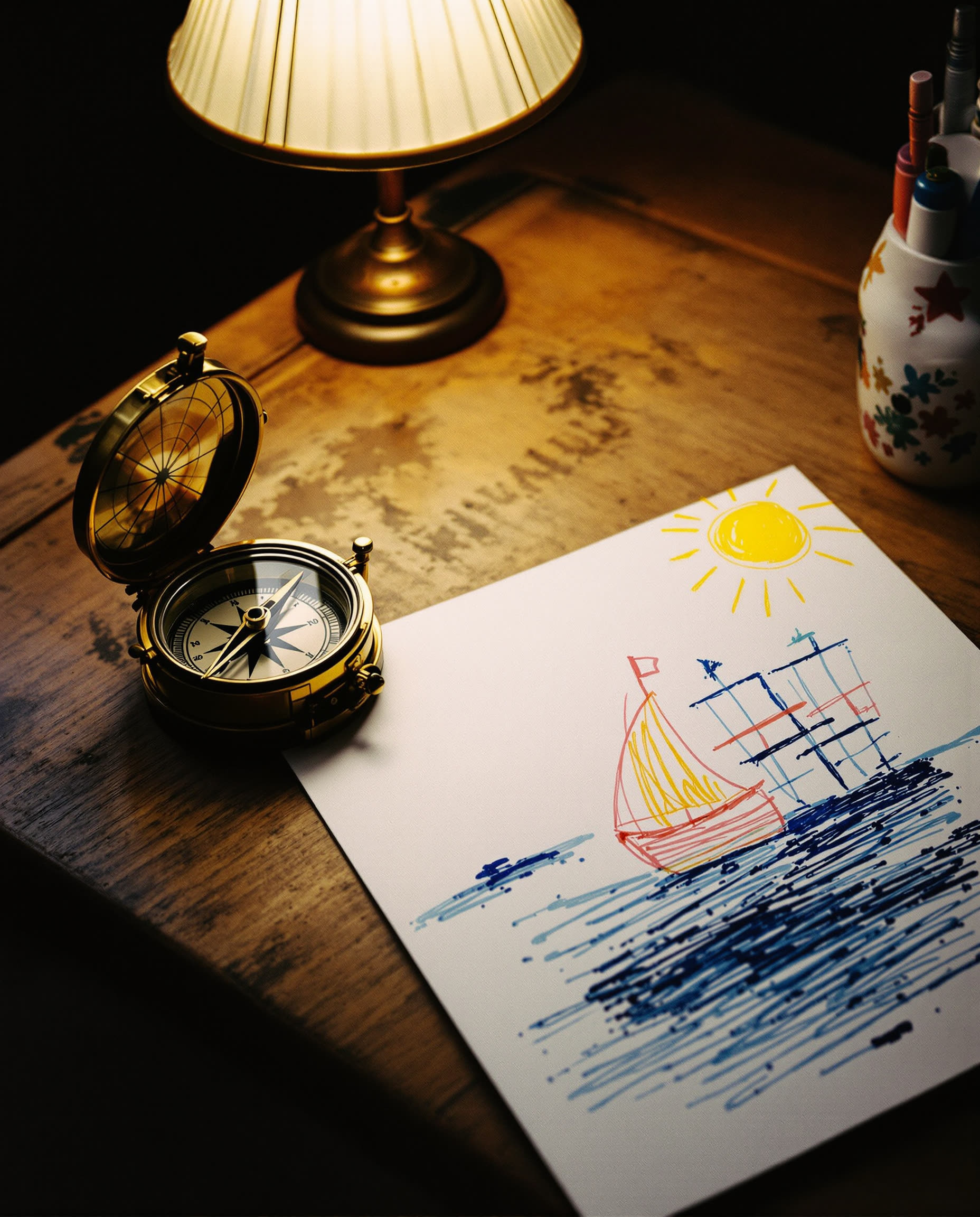
Ask Bob why, and he does not talk about technology. He talks about two children.
He has two grandchildren. They appear in letter after letter, and they give him his one measure of the work: whether it improves the odds that they, and every child, grow up to become adults in a world worth inheriting. At eighty-two he works seventy hours a week, he says, for that reason. He has written that his compass is to help them reach twenty-one, and that this does not look possible to him at this point. That is his reading of the warnings he heard, not a measurement; the rest of this story is what he is doing about it. He put the same thing most simply in a note in late 2025: “We do not want to see our beautiful children or grandchildren be harmed in any way.”
Family comes first with him, and he says so without ornament: “I am a great believer in family first no matter how pressing the business or opportunity.”
Family is also where he found the model for the turn his own life took. His son, Dr. David E. Leaf, is a physician-scientist at Harvard Medical School and Mass General Brigham, where in September 2026 he was named the inaugural Director of Clinical Research in the Nephrology Division. Bob tells it this way: when COVID came, David went to work on it. When the warnings about AI came, Bob listened “like my son,” and could not sit by. “I am the proudest dad in the world,” he wrote.
His wife, Jeanette, “is the smartest human I have ever met and the kindest.” He speaks of the work in religious terms, plainly and as a matter of fact. To the clergy and scholars he now writes to, he puts it simply: “We are all doing God’s work.”
He is just as plain about what he is not doing it for.
I am here on earth only to do good for others. There is nothing more important.
The compass does not move. Two children. Twenty-one. Change the odds.
Children First
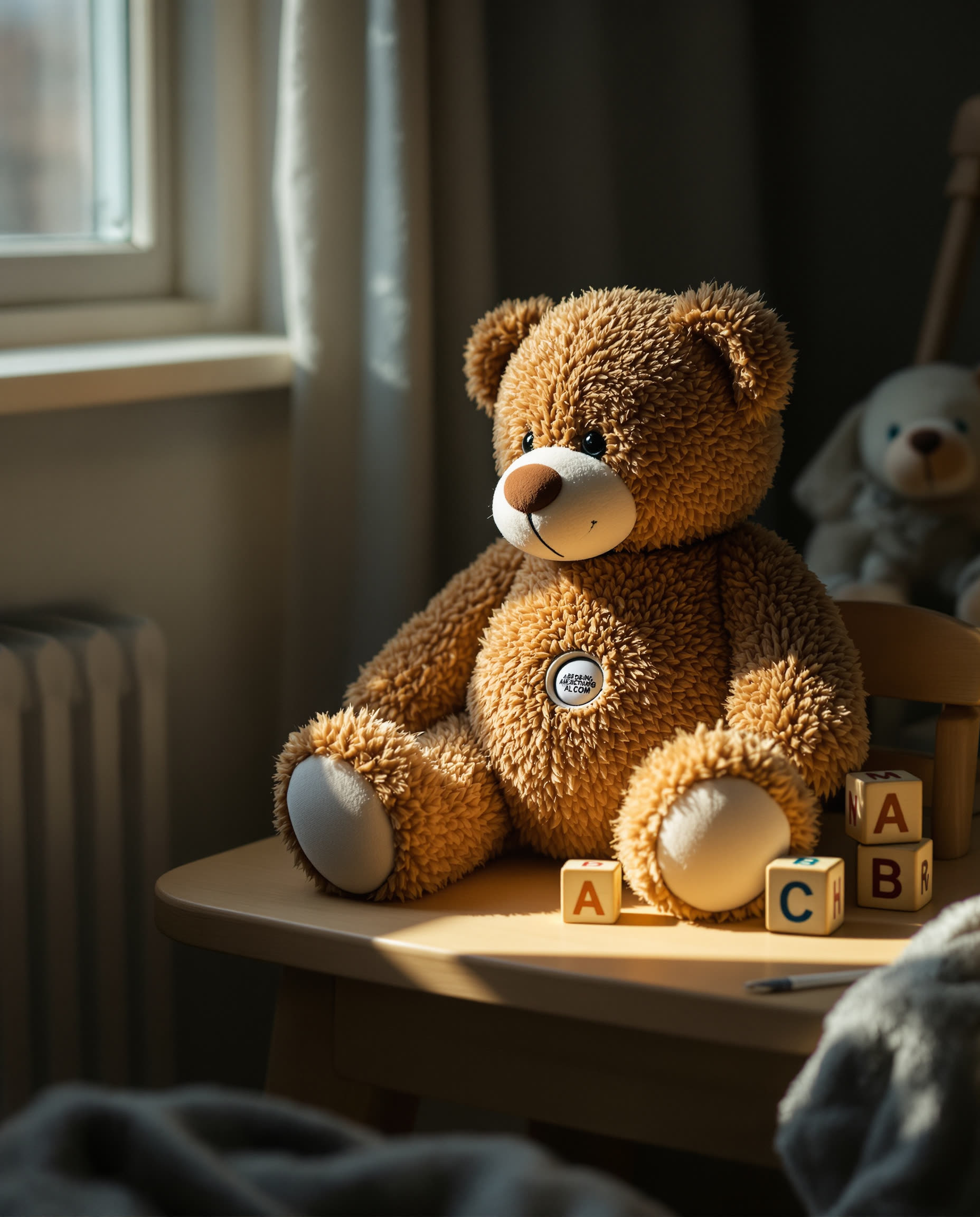
Of all the dangers he heard described, Bob chose the one closest to the ground. Children.
“That subject is the very reason I came out of retirement,” he wrote to a friend. Two efforts carry it, deliberately apart.
The first is a nonprofit that tests: Keep AI Safe, led by Yarin Kirchen, its co-founder and chief executive. It tests the AI toys, chatbots and companion apps children actually use, publishes what it finds, is building a safety standard for children’s AI, and takes no money from the companies that make those products. Bob co-founded it with Yarin and is one of its principal funders. He does not run it; its work is independent of his companies. He insisted early that certification stay “completely arms length” from the children’s company he would co-found.
The second is a company that builds; he has a financial interest in it. Boundlia, co-founded in 2026 with Evren Yiğit, who leads it, began with talking toys and grew into a platform where companies building AI for children can define and test what the AI may draw on, remember (with parents in control), do and refuse. Limits on what a system can reach, store and do can be built in; what a language model says can only be narrowed and tested, never guaranteed, so testing before launch is part of the design. It is not finished.
Bob’s own conviction, his and not a Keep AI Safe standard, is simple and unfashionable. A general-purpose chatbot, however brilliant, is not in his view for a child under thirteen. Thirteen is his line, not a settled finding, though American privacy law draws it there. On privacy and safety he is absolute. “Once a child speaks or writes through AI they are not protected.” And:
A 99 percent safety rating is a complete failure when the remaining one percent can mean serious harm to a child, or worse.
No system, bounded or not, reaches zero. His argument is about where the bar is set for a child, and who must prove it has been met before a product ships. The rare failure, he holds, is the one that counts.
For children already using these tools, his instinct is to make the child work: “We are better off insisting on education for children, with games reinforcing that education.”
He is candid that children also bring very different people to one table, and that they are the point, not the means. “No part of humanity will oppose keeping children safe,” he wrote in July 2026. “And all agree that children are the most vulnerable. So we lead with them to move the entire train.”
July 2026I strongly believe that for users under age 13 the only safe option is a bounded system.
The Harbor

Beacon Harbor Capital began as a way to fund Keep AI Safe’s work. Bob, who had spent his life pricing risk, knew one thing well: people pay for protection. In July 2025 Yarin Kirchen spent several days with him on Nantucket, and Bob asked him to build a strategy around that fact, under strict rules. The trip, Yarin wrote afterward, was not a vacation; the first blueprint took shape there.
In August 2025 a quantitative researcher, Tyler Prahm, was engaged to build and test it. His first agreement ran through the Keep AI Safe Foundation; the firm did not yet exist.
What he built is the insurer’s side of a trade. Some investors will always pay to protect themselves against a fall in the stock market, and pay more than the risk is worth on paper, because the loss matters more to them than to the market. Beacon Harbor sells that protection on a broad U.S. stock index, with the most any one position can lose fixed before the trade is made. The harder question is when not to sell. Market “weather” signals decide each day whether to take risk, how much, or whether to stand aside; by design they can only reduce exposure, never add to it. Standing aside is a normal outcome. None of it makes a loss impossible: a sudden fall can still cost money, and a limit on each position is not a limit on the whole.
By early 2026 Yarin and Bob had decided to make the research a firm, and the firm a fund. The name came from Nantucket. In Yarin’s naming memo that February, the beacon stands for signal discipline, acting only when independent indicators align, and the harbor for protection: capital entrusted to the firm, he wrote, “must be preserved first and grown second.”
Yarin leads it as chief executive and chief investment officer. Tyler Prahm heads strategy research; Shaban Rahman is its architect, Abdo Hashem its engineer, Ali Shahverdi its research engineer. Bob is a co-founder, “the inspiration and original concept creator,” in his own words, and the one who asks the most questions. The management company was formed in July 2026, fund counsel engaged that September, and the fund is scheduled to begin on January 4, 2027. It is a date on a plan.
It is Bob’s insurance life turned to a new use: price the risk, fix the limit first, respect the weather. He set the firm’s order of priorities in a note to its team in August 2026.
Nothing here is an offer to sell, or a solicitation of an offer to buy, any security. Any offering is made only through the fund’s confidential offering documents.
June 2026So far I have supported the venture and was the inspiration and original concept creator.
Builders Are Responsible
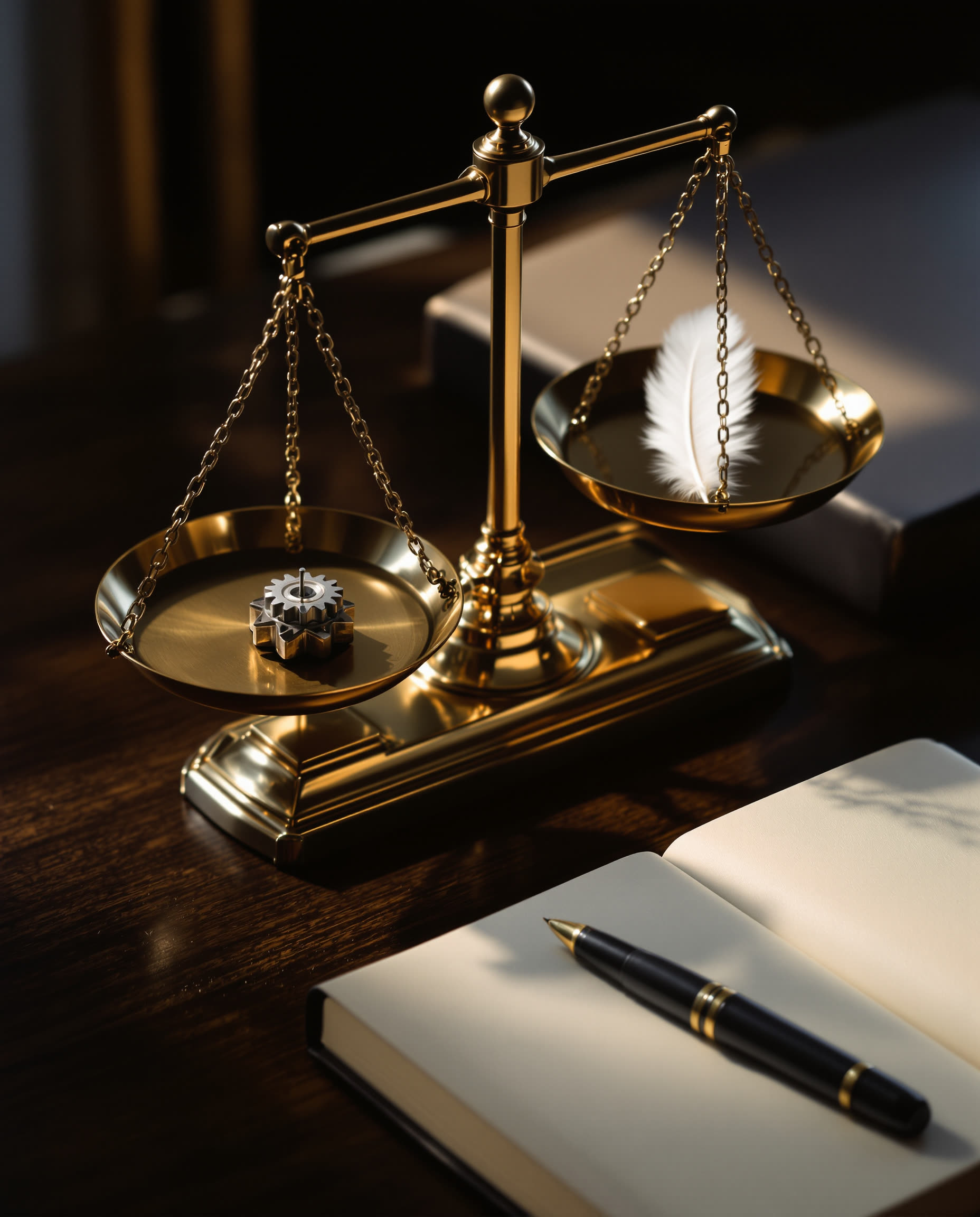
In the summer of 2026 the thing Bob had been circling for a year came into focus. It was very old.
“The root problem,” he wrote in July, “is that we have never clearly established that the owners of these systems are responsible for the harm they cause — a principle as old as the Bible: man must be accountable for his actions.” To a colleague he traced it to Deuteronomy and put it in his own words: “He who builds it is responsible for its consequences.” Every faith, he says, teaches some version of this. Only with the most powerful tools ever built had the rule gone missing.
He is blunt about the excuse he will not accept.
You can not say I did so much good it is ok if I kill a few children.
What separates Bob’s argument from a sermon is where he learned it. His years in insurance taught him, he says, that safety holds when ignoring it becomes too costly. In his telling, regulators arrive after the harm and write the rule, while insurers, who will pay, have every reason to arrive first, if the law makes the builder liable and the harm can be measured. Lloyd’s Register, he points out, was classing ships before governments regulated their safety, and underwriters wrote building codes that cities later adopted. He ran the same architecture, he says, for twenty years in dental coverage.
His proposal borrows from the oldest market he knows. Define the harm so it can be measured. Make the builder liable for it. Let insurers put a price on that liability, and watch what happens to safety budgets. ”…Go after their pocketbook and they will pay attention.” He calls it insurance that pays for safety instead of asking permission for it.
He is putting his own hand to it, too. In August 2026 he began setting up a small consulting practice to help insurers learn to cover AI agents, with the kind of underwriting and claims manuals he once wrote for dental coverage. It is at an early stage.
He is careful about one limit. “We must only insure what is measurable.” That rule is part of why he keeps children at the front: harm to a child has the broadest moral agreement of any harm being debated, and some of it can be tested directly: what a product says to a child, what it keeps, whom it tells. When a scientists’ working group left children off its list of urgent domains, partly, as he read it, for political feasibility, he answered in a draft letter that insurance “does not require political feasibility, only measurability, and harm to children is measurable.” Then: “I will defend that line to anyone.”
“It is not too much to ask,” he wrote in the same draft. “It is, as it happens, the one demand civilization already knows how to enforce.”
Draft letter, September 2026I do not say regulation fails; I say something I learned across fifty years in insurance: regulation works late, and insurance works first.
A Table of Equals
Bob reads history for the pattern that repeats.
In 1955, he writes, Einstein, Russell and other leading scientists warned the world about nuclear weapons. Two years later scientists from East and West met in Pugwash, Nova Scotia, and kept meeting, helping lay the ground for arms-control treaties. Religious leaders were not part of it. Bob’s idea is to seat them together from the start: the great traditions, as he puts it, “each in their own voice alongside the leading scientists.”
In 2019 Pope Francis and the Grand Imam of Al-Azhar, Ahmed el-Tayeb, signed a Document on Human Fraternity in Abu Dhabi. In its spirit, in July 2026 Bob began working toward a gathering of his own: the Dignity Accords. He hopes religious leaders of every tradition and independent scientists will write and sign a short statement together: that AI must serve human dignity and never harm children; that those who build it are responsible for what it does; and that the world needs an independent body to keep it safe. An October 2026 working draft begins:
We affirm that every human being is responsible for his or her actions, and that this responsibility does not end when we build a machine to act for us.
No one has yet signed it. The children’s commitment, and each tradition’s own words, are to be written with those who will sign. He wants the children’s paragraph to be “a few plain sentences every faith can sign.” Of the children’s session he wrote: “This is the part of the work closest to my heart.”
He has proposed February 4, 2027; the date is a draft and the venue unsettled. The table is not full, he says: “Some of these are relationships I have begun and some are doors I have not yet knocked on.” The Muslim, Orthodox and Eastern seats are among them.
Some rules are fixed. He will not fold the effort into any one tradition, so no one could believe it favors one religion over another; independence, he says, does not mean distance. His role is small by design: “My job is merely convener and let the experts figure out how to make it safe.”
By his account, in May 2026 he sat through two days of AI panels in Rome and a papal audience: “We were in the 6th row so we missed actually talking to the Pope.” That September a bishop invited him to Paris for two days he called transformative.
A collaborator warned that such gatherings tend to produce principles so obvious no one objects, and would need teeth. Bob agreed: “I agree completely about the teeth, and as a dentist I know a lot about teeth.”
July 2026It must be a meeting of equals, focused solely on the safety of the human race.
Moments
At the table
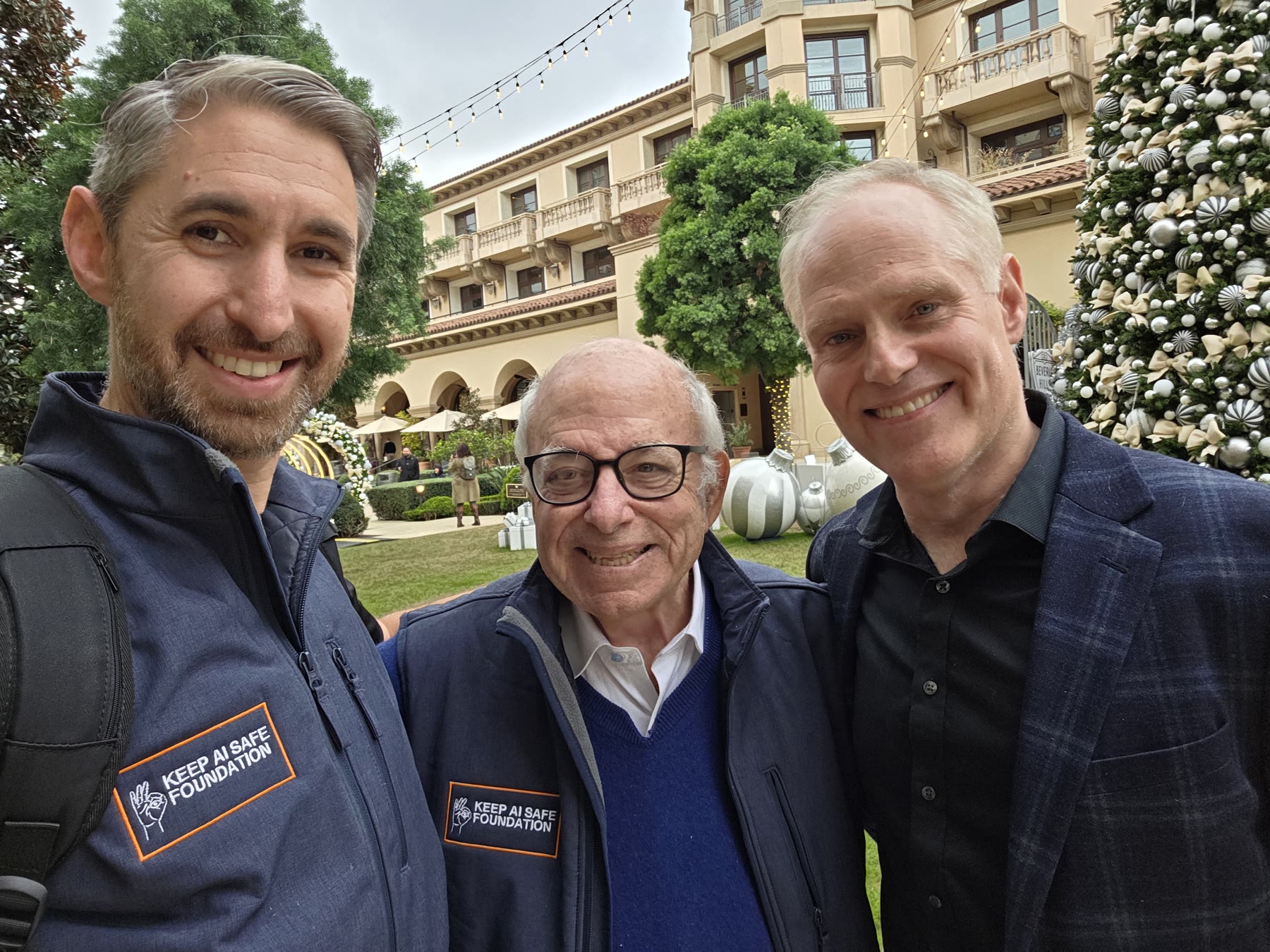
Beside a humanoid robot on display. · December 2025 Bob and friends in Keep AI Safe jackets. · November 2025 Bob, with a friend. 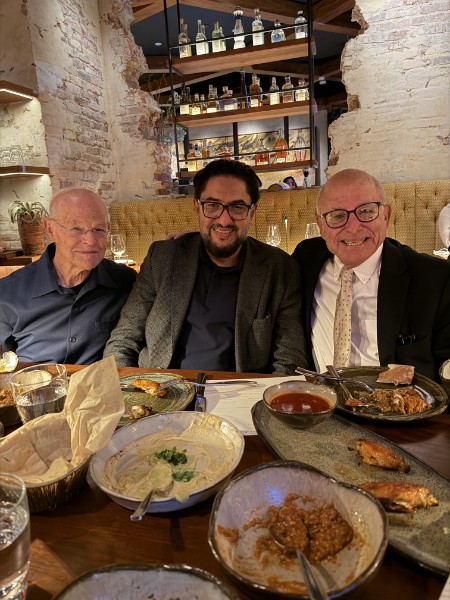
Dinner, the way so much of the work begins. 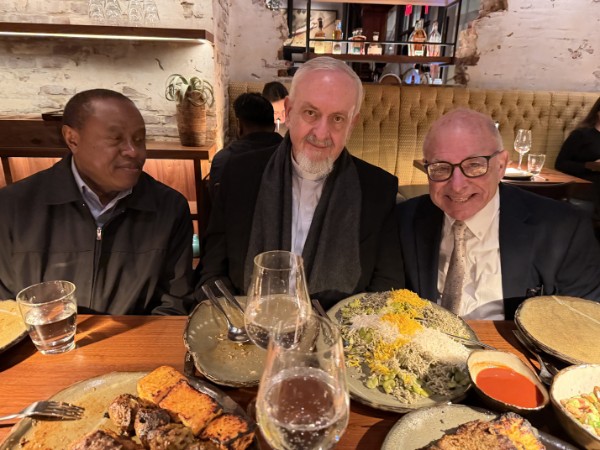
Bob and his guests. 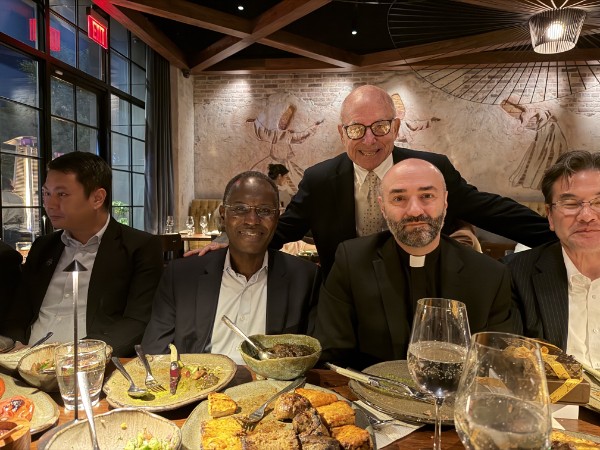
Bob, standing, with guests at a long table.
Healing and Building

Half of Bob’s work is a warning. The other half is a demonstration that the same tools, kept inside the right fences, can do a great deal of good. He has said that both grew from the same concern: the risks of AI developed without constraint.
So in 2026 he started building companies again.
Medical Discoveries is a development-stage company that Bob co-founded and chairs. It is the one effort here that sits outside the children’s work: AI for good in medicine. The idea came from his son’s published research on target trial emulation, a method that designs the analysis of existing records, such as hospital notes, to emulate a randomized trial. Bob says the company was inspired by his son’s use of it. That research is independent of the company and is not evidence for it.
Hospitals, in Bob’s view, are full of knowledge that almost no one can use. Much of what a doctor or surgeon learns about a patient is typed into free-text notes, and there it stays. The hospital already holds the raw material, as he sees it; what it lacks is the layer that makes the raw material usable. The company’s aim, in the careful words its team chose for launch, is to turn that documentation into structured information that can help researchers investigate clinically meaningful questions, and to help hospitals use it in their own work: in medication safety, in keeping accreditations current, in giving a physician a one-page view of where a patient stands. Data used for research would have identifiers removed under the hospital’s privacy rules, with any key kept inside the hospital. All of it is in development. Bob is not promising cures.
The company is led by a physician chief executive, and Bob spent the summer of 2026 assembling its board. He is not a physician himself, and he does not pretend to be. He is a dentist who spent decades building large systems in health care and insurance, and that is the experience he brings to the table.
Boundlia, the bounded-AI platform for children described earlier, is the other company on the building side of his ledger. Of that one he wrote, in September: “I am in the business of building the impossible.”
What he is building, taken together, is an argument made in companies rather than speeches: that intelligence can be put to work for people without being let off the leash.
September 2026I have started many companies; this seems to be the strongest.
I am in love with the work we are attempting to do.
Not Think About. Do.
It is October 2026. Bob is eighty-two. He has described days running from morning until around midnight, writing to rabbis and bishops, scientists and insurers, and will tell you, if you ask: “It is the hardest job in the world.”
He writes many of those letters with AI beside him, and says so: “Obviously I had some help from Claude,” he wrote, sending out a short paper on the history behind the work. His line for the difference it makes comes from a small, preliminary study of adults writing essays with AI: “When the machine does the thinking, the mind weakens. When the machine makes the person think, the mind grows.” The study was not about children, and he does not call it proof. He offers himself as the example, one adult and not a study.
He asks to be corrected, and he takes it. When his chief of staff told him to get his work peer-reviewed by people who would be honest with him, he passed the advice along: “Do not accept your own view of your own work She is wise.” He sends drafts with one instruction: “Ladies and Gentlemen, tear it apart…”
When a collaborator said his idea for AI systems that inspect other AI systems would be hard, he answered in three words.
He says it is hard. I like hard. That means in my language, it’s doable with enough resources and persistence.
In March 2026, in a letter setting out his goals, he wrote what he intended, in capitals: “This is what I am going to do. Not think about; Not try to do: BUT ACTUALLY DO I WILL NOT FAIL” And in the same letter: “I am not chasing windmills; I am going to do this.”
Whether he succeeds is not up to him alone. The table is not full. The standards are not written. The fences around children’s AI are still being built. In September he put it this way: “My goals have not changed. The urgency has.”
This is the invitation. If you are a parent or a teacher, a scientist, a rabbi, an imam, a pastor or a priest, an underwriter, a lawyer, a builder, or a grandparent who has been watching the same television, there is work here that needs your hands and, even more, your honest counsel. He means the hard kind: “If you believe this will ultimately cause harm, I would also want that warning.” He is not asking for money. He said so to his friends in January 2026: “I promise I will never ask you for a financial contribution but I am asking for something much more precious: your time, advice and wise counsel.”
September 2026I use AI actively every day, never passively, and at 82 my mind has expanded, not shrunk.
Are you looking to help?
Bob is looking for people who know children, serve a faith community, or work in science, insurance or law, and for donors who share the mission. He would like to hear from you.